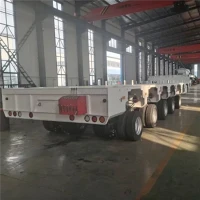
What are the regulations regarding the use of Low Bed Trailer Dollies?
As a supplier of Low Bed Trailer Dolly, I've seen how the usage of these essential equipment is governed by a complex web of regulations. These regulations are not just bureaucratic red - tape; they are crucial for ensuring safety on the roads, protecting the environment, and maintaining the integrity of the transportation industry.
Weight and Load Regulations
One of the most fundamental regulations related to low bed trailer dollies pertains to weight and load. Every jurisdiction has specific limits on the maximum weight that a low bed trailer dolly can carry. This is to prevent overloading, which can lead to a multitude of problems. Overloaded trailers can cause excessive wear and tear on the axles, tires, and other components of the dolly. This not only shortens the lifespan of the equipment but also increases the risk of mechanical failures during transit.
For example, in the United States, the Federal Bridge Gross Weight Formula regulates the maximum allowable weight on a vehicle based on the number of axles and the distance between them. A low bed trailer dolly used in interstate transportation must comply with these federal standards, as well as any state - specific regulations that may be more restrictive. Violating weight regulations can result in hefty fines, and in severe cases, the impoundment of the vehicle and cargo.


Moreover, the distribution of the load is equally important. The load should be evenly distributed across the trailer bed to maintain stability. An unevenly distributed load can cause the dolly to tip over, especially during turns or sudden stops. Operators are required to follow strict loading procedures to ensure that the center of gravity of the load is within the acceptable range.
Safety Equipment Regulations
Another set of critical regulations focuses on safety equipment. Low bed trailer dollies are required to be equipped with various safety features to protect both the operators and other road users. Braking systems are at the forefront of these requirements. High - quality brakes are essential for stopping the heavy loads carried by these dollies safely. In many regions, hydraulic brakes are mandatory, and they must be regularly inspected and maintained to ensure optimal performance.
Lights and reflectors are also crucial components. Trailer dollies must have functioning headlights, taillights, brake lights, and turn signals. Reflectors should be properly positioned to increase visibility, especially during low - light conditions. Additionally, safety chains are required to secure the trailer to the towing vehicle. These chains act as a backup in case the hitch fails, preventing the trailer from detaching and causing a serious accident.
Mirrors are another important safety feature. Operators need to have a clear view of the sides and rear of the trailer. Adjustable mirrors that allow for a wide field of vision are a must - have. Some regulations may also require the installation of additional mirrors to eliminate blind spots.
Permitting and Registration Regulations
Using a low bed trailer dolly often requires obtaining the appropriate permits and registrations. Different types of loads may require special permits. For example, transporting oversized or overweight loads is a common scenario with low bed trailer dollies, and these usually need permits. These oversized load permits typically specify the route, time of travel, and any special requirements such as escort vehicles.
Registration is also essential. The trailer dolly must be registered with the relevant transportation authorities, and this registration must be kept up - to - date. The registration process usually involves providing information about the make, model, and weight of the dolly, as well as proof of insurance.
Driver Qualification Regulations
The regulations also extend to the drivers operating low bed trailer dollies. Drivers must have the appropriate commercial driver's license (CDL) with the correct endorsements. For example, in the United States, a Class A CDL is often required for towing a low bed trailer dolly, especially if the combined weight of the towing vehicle and the trailer exceeds 26,001 pounds.
Drivers are also required to undergo regular medical examinations to ensure they are physically fit to operate the vehicle. They must have good eyesight, hearing, and overall physical health. Additionally, drivers are subject to hours - of - service regulations, which limit the number of consecutive hours they can drive and require them to take mandatory rest breaks. This is to prevent driver fatigue, which is a significant cause of accidents in the transportation industry.
Environmental Regulations
In recent years, environmental regulations have also become a significant factor in the use of low bed trailer dollies. Emission standards are becoming increasingly strict, and many regions require vehicles to meet certain levels of exhaust emissions. This may involve the use of cleaner - burning engines or the installation of emission - control devices.
Noise pollution is another environmental concern. Low bed trailer dollies should not produce excessive noise, especially in residential areas or during certain hours of the day. Manufacturers are constantly working on developing quieter models to comply with these regulations.
Impact on Our Business as a Supplier
As a supplier of Low Bed Trailer Dolly, these regulations have a profound impact on our business. We need to ensure that all the products we offer meet the relevant standards. This involves working closely with manufacturers to ensure that our dollies are designed and built with the necessary safety features, weight - capacity limits, and environmental compliance measures.
We also provide support and guidance to our customers regarding the regulations. Many of our clients may not be fully aware of all the legal requirements, especially when it comes to transporting special or oversized loads. We offer consultations to help them understand the permitting process, driver qualifications, and safety procedures.
In addition, we keep a close eye on any regulatory changes. New regulations can be introduced at any time, and we need to be able to adapt quickly. This may involve updating our product offerings, providing new training materials to our customers, or even adjusting our marketing strategies to highlight the compliance features of our products.
Other Related Products in Our Catalog
In addition to our Low Bed Trailer Dolly, we also offer a range of other hydraulic - steering special low - profile vehicles. Our Hydraulic Lifting Steering Wind Bladetrailer is designed specifically for transporting large wind turbine blades. It has unique features such as hydraulic lifting and steering mechanisms to handle the delicate and oversized cargo.
Our Length Extendable Tank Transporttrailer is an innovative solution for transporting liquid or gaseous substances. The length - extendable feature allows for different capacity requirements and better load distribution.
The Steering Axis Tank Transport Trailer is another specialized product. It offers enhanced maneuverability, which is crucial when transporting tanks. The steering axis design allows the trailer to follow the path of the towing vehicle more closely, reducing the risk of accidents during turns.
Finally, our Hydraulic Steering Low Bed Trailerdolly combines the features of a low - bed design with hydraulic steering for increased control and ease of operation when transporting heavy loads.
Invitation to Purchase
If you are in the market for a reliable and compliant low bed trailer dolly or any of our other specialized hydraulic - steering vehicles, we invite you to reach out. Our team of experts is ready to assist you in finding the perfect solution for your transportation needs. We can provide detailed information about our products, answer any questions you may have regarding regulations, and offer a competitive pricing structure. Contact us today to start the procurement process and experience the quality and performance of our products firsthand.