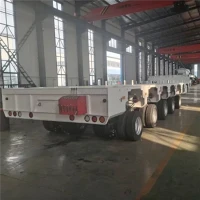
Securing cargo on a Hydraulic Gooseneck Lowboy Trailer is crucial for safe transportation. As a supplier of these trailers, I've seen firsthand the importance of proper cargo securing. In this blog, I'll share some tips on how to do it right.
Understanding the Hydraulic Gooseneck Lowboy Trailer
First off, let's talk a bit about the Hydraulic Gooseneck Lowboy Trailer. It's a specialized type of trailer designed to carry heavy and oversized loads. The hydraulic gooseneck allows for easy adjustment of the trailer's height, which is super handy when loading and unloading cargo. The lowboy design means the trailer deck is closer to the ground, providing a lower center of gravity and better stability during transport.


We offer a range of trailers, including the Goldhofer Multi Axle Trailer, Multi Axle Hydraulic Low Bed Trailer, Wolf-type Frame Transport Vehicle, Hydraulic Axis Car, and Bridge Transport Trailer. Each of these trailers is built to handle different types of cargo, so it's important to choose the right one for your needs.
Preparing the Trailer
Before loading any cargo, you need to make sure the trailer is in good condition. Check the tires for proper inflation and any signs of wear or damage. Inspect the hydraulic system to ensure it's functioning correctly. Make sure the deck is clean and free of any debris that could interfere with the cargo's stability.
Also, check the tie-down points on the trailer. These are the spots where you'll be attaching the ropes, chains, or straps to secure the cargo. Make sure they're strong and in good condition. If any of the tie-down points are damaged or weak, don't use them. Get them repaired or replaced before loading the cargo.
Loading the Cargo
When loading the cargo, it's important to distribute the weight evenly across the trailer deck. Uneven weight distribution can cause the trailer to become unstable, which is a major safety hazard on the road. Use a forklift or other loading equipment to carefully place the cargo on the deck.
If you're loading multiple items, stack them in a way that maximizes stability. Place the heaviest items on the bottom and closer to the center of the trailer. This helps keep the center of gravity low and reduces the risk of the cargo shifting during transport.
Securing the Cargo
Once the cargo is loaded, it's time to secure it. There are several methods you can use, but the most common ones are ropes, chains, and straps.
Ropes
Ropes are a simple and inexpensive way to secure cargo. However, they're not as strong as chains or straps, so they're best used for lighter loads. When using ropes, make sure to tie them tightly and use proper knots. A good knot will prevent the rope from coming loose during transport.
Chains
Chains are much stronger than ropes and are ideal for heavy loads. They come in different sizes and strengths, so make sure to choose the right one for your cargo. When using chains, use chain binders to tighten them. Chain binders are devices that allow you to adjust the tension in the chain, ensuring a secure fit.
Straps
Straps are another popular choice for securing cargo. They're made of strong materials like nylon or polyester and are available in different widths and lengths. Straps are easy to use and can be adjusted quickly. They also come with different types of buckles, such as ratchet buckles, which make it easy to tighten and loosen the strap.
No matter which method you choose, make sure to use enough tie-downs to secure the cargo. The general rule of thumb is to use one tie-down for every 10 feet of cargo. Make sure the tie-downs are attached to the tie-down points on the trailer and are pulling the cargo down towards the deck.
Additional Safety Measures
In addition to using the right tie-downs, there are some other safety measures you can take to secure the cargo.
Use Corner Protectors
If the cargo has sharp edges, use corner protectors to prevent the ropes, chains, or straps from being cut. Corner protectors are made of materials like rubber or plastic and can be placed on the corners of the cargo.
Check the Cargo Regularly
During transport, make sure to stop periodically and check the cargo. Make sure the tie-downs are still tight and the cargo hasn't shifted. If you notice any problems, stop and fix them before continuing on your journey.
Follow the Law
Make sure to follow all the laws and regulations regarding cargo securing. Different states and countries have different rules, so it's important to know the requirements. Failure to comply with the law can result in fines and other penalties.
Conclusion
Securing cargo on a Hydraulic Gooseneck Lowboy Trailer is essential for safe transportation. By following these tips, you can ensure that your cargo arrives at its destination safely and without any damage. If you're in the market for a Hydraulic Gooseneck Lowboy Trailer or need advice on cargo securing, don't hesitate to reach out for more information and to discuss your specific needs and explore how our trailers can meet them.