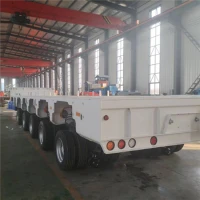
The design of a low flatbed semi-trailer plays a pivotal role in determining its overall performance. As a supplier of low flatbed semi-trailers, I've witnessed firsthand how different design aspects can significantly impact the functionality, efficiency, and safety of these vital transport vehicles. In this blog post, I will delve into the various design elements of low flatbed semi-trailers and discuss how they affect performance.
Structural Design
The structural design of a low flatbed semi-trailer is the foundation upon which its performance is built. A well - engineered structure ensures the trailer can withstand heavy loads and harsh operating conditions.
One of the key aspects is the frame design. A low flatbed semi - trailer typically has a robust frame made from high - strength steel. The frame's geometry, such as the shape and the arrangement of its members, is crucial. For example, a box - section frame design offers excellent resistance to torsional and bending forces. This allows the trailer to maintain its shape even when carrying unevenly distributed loads, which is common in many transportation scenarios. A properly designed frame also reduces the risk of structural failure, enhancing the overall safety of the trailer.
The height of the flatbed is another important structural factor. A lower flatbed design provides a lower center of gravity. This improves the trailer's stability during transit, especially when taking turns or driving on uneven roads. A lower center of gravity reduces the likelihood of roll - overs, which can cause significant damage to the cargo and pose a serious threat to road safety. Our 5 Axle Heavy Duty Lowboy Trailer features a low - height design, which has been well - received by customers for its superior stability.
Axle and Suspension Design
The axle and suspension system of a low flatbed semi - trailer are critical for load distribution and ride quality.


The number of axles on a trailer directly affects its load - carrying capacity. More axles can distribute the weight of the cargo more evenly, reducing the pressure on each individual tire. This not only extends the tire life but also allows the trailer to carry heavier loads. For instance, our 5 Axle Heavy Duty Lowboy Trailer can handle extremely heavy loads due to its five - axle configuration.
The type of suspension system also plays a vital role. There are two main types of suspensions used in low flatbed semi - trailers: leaf spring suspensions and air suspensions. Leaf spring suspensions are known for their simplicity and durability. They are relatively inexpensive to manufacture and maintain, making them a popular choice for many applications. However, they may provide a rougher ride compared to air suspensions.
Air suspensions, on the other hand, offer a smoother ride by adjusting the air pressure in the airbags according to the load. This helps to maintain a consistent ride height and reduces the impact on the cargo. Air - suspended trailers are often preferred for transporting sensitive or high - value cargo. Our trailers can be equipped with either type of suspension system, depending on the customer's specific requirements.
Loading and Unloading Design
Efficient loading and unloading are essential for the productivity of a low flatbed semi - trailer. The design of the trailer should facilitate easy access to the cargo area.
The length and width of the flatbed are important factors. A longer and wider flatbed provides more space for loading larger and bulkier items. However, it also needs to comply with transportation regulations. Our trailers are designed with optimal dimensions to balance cargo capacity and regulatory compliance.
Some low flatbed semi - trailers are equipped with ramps or hydraulic systems to assist with loading and unloading. Ramps can be used to drive vehicles or heavy equipment onto the trailer, while hydraulic systems can be used to tilt the flatbed for easier access. For example, our Removable Gooseneck Lowboy Trailer features a removable gooseneck design, which allows for quick and easy loading of oversized cargo.
Braking System Design
The braking system is a critical safety component of a low flatbed semi - trailer. A well - designed braking system ensures that the trailer can stop safely and quickly, especially when carrying heavy loads.
There are different types of braking systems available, including drum brakes and disc brakes. Drum brakes are commonly used in trailers due to their simplicity and cost - effectiveness. They work by using brake shoes to press against the inside of a drum, creating friction to slow down the wheels.
Disc brakes, on the other hand, offer better braking performance and heat dissipation. They are more responsive and can provide more consistent braking force. However, they are generally more expensive than drum brakes. Our trailers can be equipped with either drum or disc brakes, depending on the customer's budget and performance requirements.
Aerodynamic Design
Although the primary function of a low flatbed semi - trailer is to carry heavy loads, aerodynamic design can still have an impact on its performance, particularly in terms of fuel efficiency.
A streamlined shape can reduce air resistance as the trailer moves through the air. This means that the tractor pulling the trailer doesn't have to work as hard, resulting in lower fuel consumption. Some modern low flatbed semi - trailers are designed with aerodynamic features such as rounded edges and fairings. These features not only improve fuel efficiency but also reduce the overall operating costs for the customer.
Impact on Different Applications
The design of a low flatbed semi - trailer can also affect its suitability for different applications.
For container transportation, a 3 Axles Container Flatbed Trailer with a flat and sturdy surface is required. The trailer needs to be able to securely hold the containers during transit, and the design of the tie - down points and the overall structure is crucial.
In military applications, Military Special Vehicles often require trailers with high - strength frames and reliable braking systems. They need to be able to operate in harsh environments and carry heavy military equipment.
For the transport of heavy machinery, a 50 Ton Gooseneck Lowboy Trailer with a low - height design and a strong frame is essential. The low height allows for easy loading and unloading of the machinery, while the strong frame can withstand the weight of the equipment.
Conclusion
In conclusion, the design of a low flatbed semi - trailer has a profound impact on its performance. From the structural design to the aerodynamic features, every element plays a crucial role in determining the trailer's functionality, efficiency, and safety. As a supplier, we understand the importance of these design factors and strive to provide our customers with trailers that are not only well - designed but also meet their specific needs.
Whether you are in the business of container transportation, military logistics, or heavy machinery hauling, we have the right low flatbed semi - trailer for you. If you are interested in learning more about our products or have specific requirements for your transport operations, we invite you to get in touch with us. We look forward to discussing your needs and helping you find the perfect trailer solution.